 Direkt zum Inhalt



Madurasherbals
Tamanu Oil
Verfügbarkeit für Abholungen konnte nicht geladen werden
Product Description:
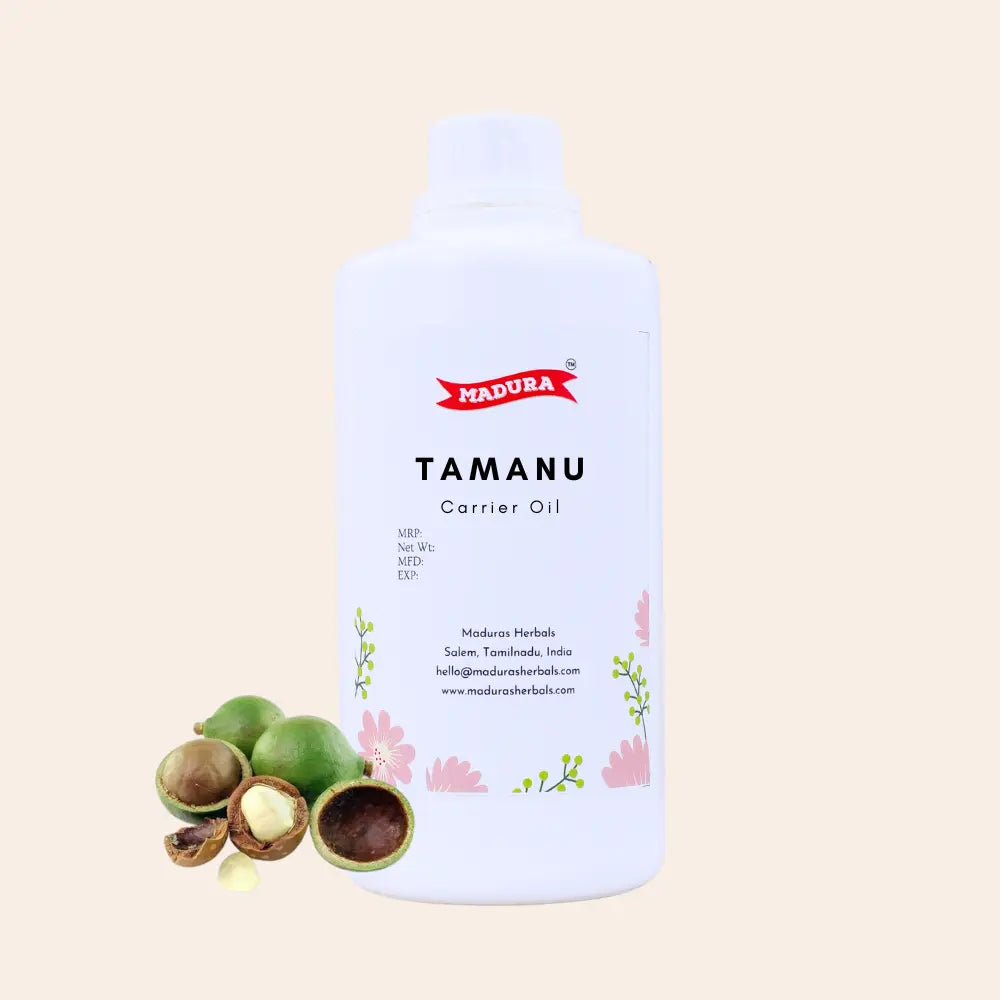
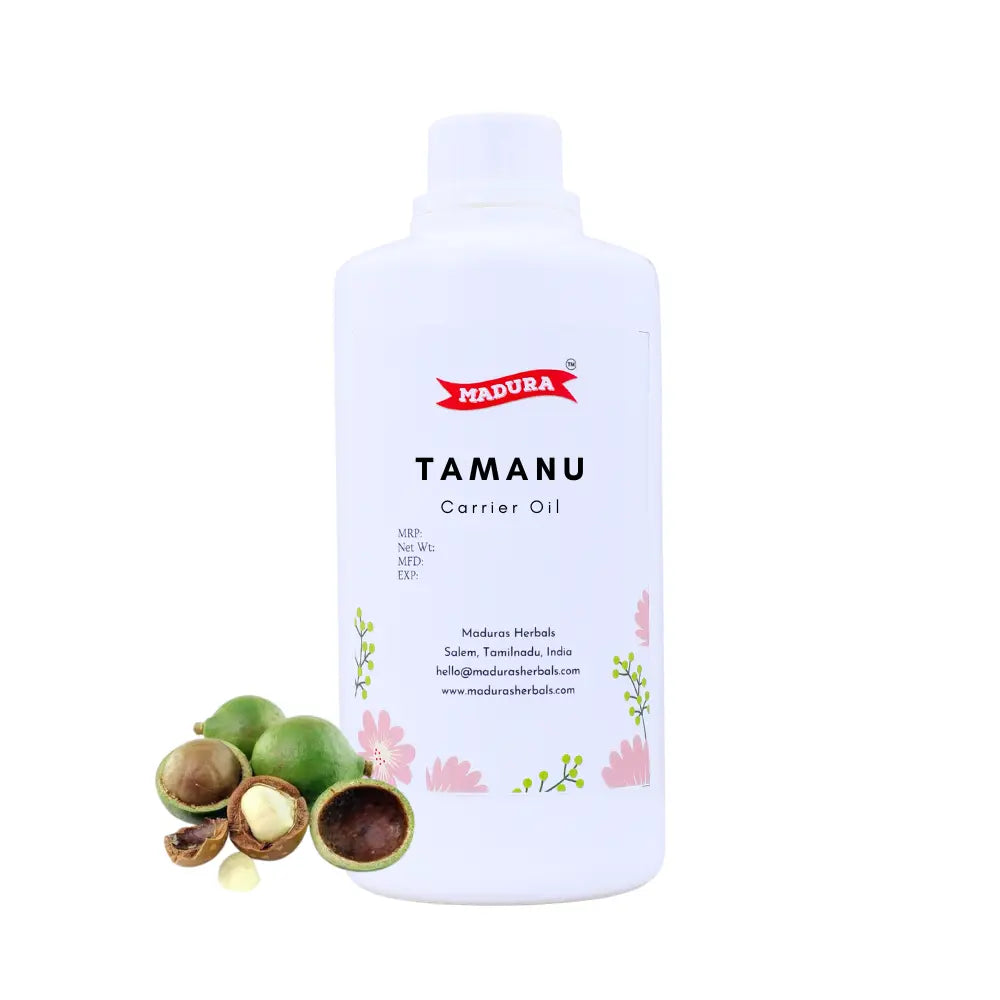
Tamanu Oil is a cold pressed carrier oil extracted from the nuts of the tamanu tree (Calophyllum inophyllum), a tropical evergreen tree native to Southeast Asia and the islands of the Pacific. Often referred to as green gold, Tamanu Oil has a long history of traditional use among Pacific Island and South Asian communities. The oil is bluish green to dark olive in colour with a strong, distinctive earthy and nutty scent and a thick, rich consistency. At Maduras Herbals, we supply Tamanu Oil as a raw material for cosmetic manufacturers, DIY formulators, and skin care product developers looking for a rare, traditional carrier oil.
Botanical and Trade Names
Botanical Name: Calophyllum inophyllum
English Name: Tamanu Oil
INCI Name: Calophyllum Inophyllum Seed Oil
Other Common Names: Foraha Oil, Kamani Oil, Green Gold
Key Properties
- Cold pressed from tamanu nuts with no heat and no chemical solvents involved
- Thick, rich texture with a strong, distinctive earthy and nutty scent
- Naturally rich in essential fatty acids and naturally occurring resinous compounds unique to the plant
- Unrefined and supplied in its natural state without bleaching or deodorisation
- Distinctive bluish green to dark olive colour, characteristic of genuine tamanu oil
- Long standing traditional heritage across Pacific Island and South Asian cultures
- Often blended with lighter carrier oils due to its rich, thick consistency
About Tamanu Oil
Tamanu oil comes from the seeds of Calophyllum inophyllum, a tree native to tropical coastal regions stretching from East Africa and South Asia across to the Pacific Islands, including along India's southern and eastern coastlines. The oil is thick, dark green, and slightly viscous, and is sometimes called "green gold" both for its colour and its well-documented reputation for repairing damaged and inflamed skin. While it is only slowly becoming more mainstream in modern cosmetics, it has been the subject of scientific literature for many years and has a long history in traditional folklore medicine for wound healing, skin repair, and anti-inflammatory applications.
What makes tamanu oil chemically distinctive is its unsaponifiable matter, which contains a unique set of terpenoids including canophyllol and canophyllic acid, and phenols including calophyllic acid, calophylloids, and inophylloids. These compounds are not commonly found in other carrier oils and are responsible for tamanu's particularly notable skin repair and anti-scarring properties. Scientific literature and traditional practice both point to it helping in the care of damaged, inflamed, and acne-prone skin, and it has been shown to repair the skin and diminish the appearance of scarring. On healthy skin, it helps maintain a healthy glow. Its fatty acid profile includes oleic acid at around 40%, linoleic acid at 28%, stearic acid at 17%, and palmitic acid at 15%, giving it a well-rounded composition that supports both conditioning and barrier function.
| Property | Detail |
|---|---|
| INCI Name | Calophyllum Inophyllum Seed Oil |
| Sourced From | Coastal tropical regions from East Africa and South Asia to the Pacific Islands; also found along India's southern and eastern coastlines |
| Processed & Packed | Processed & Packed in India |
| Function | Antimicrobial, antioxidant, hair conditioning, oral care, skin conditioning |
| Absorption Rate | Typically medium; may feel thicker than lighter oils due to its natural viscosity |
| Recommended Usage Amount | Typically 1 to 20% blended with other oils; can go up to 100% though rarely used neat due to colour and viscosity |
| Heat Stability | Generally poor; best added below 40°C to protect its unique unsaponifiable compounds |
| Colour | Typically dark green; colour depth may vary slightly between batches and will visibly affect lighter formulations |
| Scent | Woody, nutty odour |
| Oxidation Stability | Generally unstable; cool dark storage and antioxidant support in formulations recommended |
| Restrictions | Rare cases of contact dermatitis reported — use at lower concentrations and include patch test recommendation; do not store in polystyrene |
| Substitution | No specific substitute |
Working with Tamanu Oil in Your Formulations
Tamanu oil works well in anhydrous products such as balms, masks, butters, and scrubs, and can also be used in emulsions and haircare products. It is most commonly used blended with other carrier oils at 1 to 20% rather than as a standalone base, which allows its active compounds to deliver their skin repair and anti-inflammatory benefits without the formulation challenge of working with a high-concentration dark green oil.
Quality & Formulation Notes
There are several practical things to plan around with tamanu oil. First, it can solidify in cold weather — gently heating to between 25 and 35°C and shaking the container before use will restore it to a pourable consistency. Second, its dark green colour will visibly affect lighter formulations, so colour should be considered early in product development. Third, a rare case of contact dermatitis due to topical use of Calophyllum oil has been described in scientific literature, which is why using it at lower concentrations in cosmetic products is the recommended approach. No safety or legal limits apply, but caution is sensible.
Applications
Skin Care Formulations: Facial oils, body lotions, balms, salves, massage oil blends
Hair Care Formulations: Hair oils and scalp oil blends in combination with lighter carrier oils
Cosmetic and Soap Making: Soap making, carrier base for blended aromatherapy formulations, lotion and cream oil-phase ingredient
General Use: Bulk supply for cosmetic manufacturers, DIY skin care kits, salon and spa product formulations
Packing and Storage
Store in a cool, dry place away from direct sunlight and heat. Keep the container tightly sealed when not in active use. Recommended storage temperature below 25°C. Best before 18 months from packaging date. Natural variation in colour and scent between batches is characteristic of a cold pressed, unrefined oil.
Caution
Patch test is recommended before use on skin. In case of any allergic reaction, discontinue use and consult a dermatologist or physician.
Disclaimer
All information on this website is for educational and reference purposes only and does not constitute medical, professional, legal, or technical advice.
Intended Use
Our products are raw materials and ingredients supplied for cosmetic formulation, personal care, manufacturing, aromatherapy, candlemaking, soap making, food and beverage, confectionery, research, and related industries. Suitability for any specific application is the buyer's responsibility.
Natural & Batch Variation
Natural variations in colour, aroma, texture, viscosity, and potency may occur between batches, as this is characteristic of natural and plant-derived ingredients and does not indicate a quality defect.
For formulated and processed products, including chemicals, waxes, bases, butters, and extracts, variations in performance or specification may also occur between batches.
For colouring agents and food colours, variations in shade, intensity, particle size, dispersion, and thickness may occur between batches due to sourcing or processing differences. For flavor oils, variations in colour, taste profile, and aromatic strength may occur between batches.
Equipment & Kits
Equipment, accessories, moulds, containers, and kits are utility and starter-level items with no performance warranty. Product images, kit contents, and item brands or models may vary based on stock availability.
Safety & Internal Use
Essential oils, aroma compounds, flavor oils, concentrated extracts, and chemicals must be handled responsibly and diluted appropriately. Products intended for internal use, including herbal powders, Ayurvedic botanicals, and food-grade ingredients, should be used under the guidance of a qualified healthcare, Ayurvedic, or food safety practitioner.
Testing, Samples & Lab Reports
Customers are responsible for testing suitability within their own formulation and intended application before placing bulk orders. Samples are at your own cost, and free samples may be available subject to stock and product type. Sample size and quantity are at our discretion, and shipping charges apply. Laboratory test reports can be arranged on request at an additional cost.
Representative Documents: COA & MSDS
The COA and MSDS linked on product pages are representative documents shared for reference purposes only and may not reflect the exact batch supplied for your order.
Batch-specific documents can be requested before or at the time of purchase. It is the customer's responsibility to verify that specifications meet their intended use before purchasing in bulk.
B2B Terms
All transactions on this website are B2B in nature. By purchasing from us, you agree to our Terms & Conditions, Privacy Policy, Shipping Policy, and Refund Policy.