 콘텐츠로 건너뛰기



Madurasherbals
Seabuck Thorn Oil
픽업 사용 가능 여부를 로드할 수 없습니다.
Product Description:
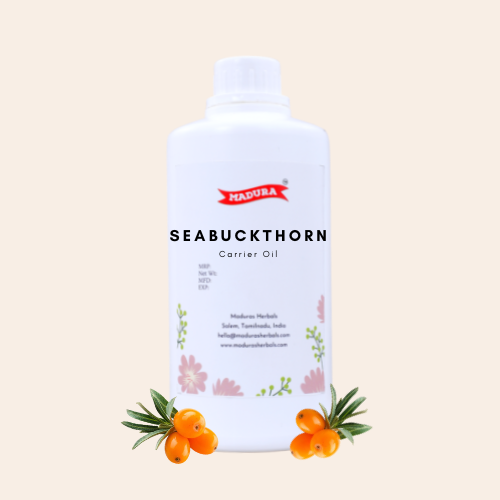
Sea Buckthorn Oil is a cold pressed carrier oil obtained from the berries of the sea buckthorn shrub (Hippophae rhamnoides), a thorny plant that grows across the cold, mountainous regions of Asia and Europe, including the high altitude Himalayan belt. The oil is deep orange to red in colour due to its naturally high carotenoid content, with a distinctive fruity scent and a rich, moderately thick texture. Sea Buckthorn Oil has a long history of traditional use in Tibetan and Russian wellness practices and has become a sought after ingredient in modern skin care formulation. At Maduras Herbals, we supply Sea Buckthorn Oil as a raw material for cosmetic manufacturers, DIY formulators, and skin care product developers looking for a vibrant, nutrient dense carrier oil.
Botanical and Trade Names
Botanical Name: Hippophae rhamnoides
English Name: Sea Buckthorn Oil
INCI Name: Hippophae Rhamnoides Fruit Oil
Other Common Names: Sea Buckthorn Berry Oil, Sea Buckthorn Fruit Oil
Key Properties
- Cold pressed from sea buckthorn berries with no heat and no chemical solvents involved
- Rich, moderately thick texture with a distinctive fruity scent
- Naturally high in carotenoids, giving the oil its characteristic deep orange to red colour
- Naturally rich in essential fatty acids, Vitamin E, and plant sterols
- Unrefined and supplied in its natural state without bleaching or deodorisation
- Well suited for dry, dull, and mature skin formulations
- Compatible with other carrier oils, butters, and oil-phase ingredients
About Seabuckthorn Oil
Seabuckthorn oil is extracted from the berries and seeds of Hippophae rhamnoides, a hardy thorny shrub native to the cold-desert Himalayan belt and found growing wild at high altitudes across Ladakh, Himachal Pradesh, and Uttarakhand in India. It is one of the few genuine Indian-origin specialty oils in the carrier oil world, and the berries have been used in Tibetan and Ayurvedic medicine for centuries for their exceptionally high nutrient density. Two distinct oils can be produced from seabuckthorn — berry pulp oil and seed oil — and they have quite different compositions, with berry pulp oil being particularly rich in carotenoids and the seed oil having a more balanced fatty acid profile.
Seabuckthorn oil, particularly the berry pulp oil, is remarkable for its extraordinarily high carotenoid content, which gives it one of the most vivid orange colours of any plant oil. It contains beta-carotene, zeaxanthin, lycopene, and other carotenoids at levels far exceeding most other oils, alongside vitamins C, E, and K, flavonoids, and phytosterols. Its fatty acid composition includes palmitoleic acid, palmitic acid, oleic acid, and linoleic acid in a well-balanced profile. It has genuinely documented antioxidant, anti-inflammatory, wound-healing, and skin-regenerating properties, making it one of the most active carrier oils available for cosmetic formulation. Even at very low usage percentages it delivers a significant performance and colour contribution.
| Property | Detail |
|---|---|
| INCI Name | Hippophae Rhamnoides Fruit Oil / Hippophae Rhamnoides Seed Oil |
| Sourced From | India — Himalayan cold-desert belt; Ladakh, Himachal Pradesh, and Uttarakhand |
| Processed & Packed | Processed & Packed in India |
| Function | Emollient, skin conditioning, antioxidant, skin regenerating |
| Absorption Rate | Typically medium; berry pulp oil may feel slightly richer than the seed oil version |
| Recommended Usage Amount | Typically 0.5 to 5% for berry pulp oil due to intense colour; seed oil can be used up to 100% but is also commonly blended |
| Heat Stability | Generally moderate; best added below 40°C to protect carotenoid and vitamin content |
| Colour | Berry pulp oil is typically vivid orange to deep red-orange — one of the most intensely coloured of all carrier oils; seed oil is typically lighter yellow to orange; colour will significantly affect formulations even at low percentages |
| Scent | Characteristic fruity, slightly tart aroma; scent intensity may vary between batches and between pulp and seed versions |
| Oxidation Stability | Generally moderate to good; carotenoid content provides some natural antioxidant protection; cool dark storage recommended |
| Restrictions | None; intense colour must be carefully planned for in product development — even at 1% it will visibly colour a formulation |
| Substitution | No direct substitute for its specific carotenoid profile; rosehip oil can partially substitute for skin regenerating applications |
Working with Seabuckthorn Oil in Your Formulations
Seabuckthorn berry pulp oil is most practically used as an active ingredient at very low percentages (typically 0.5 to 2%) in anti-ageing serums, skin repair formulations, after-sun products, and wound-healing preparations where its extraordinary carotenoid and antioxidant content can deliver meaningful results without overwhelming the formulation with colour. The seed oil version is more versatile and can be used at higher percentages in facial oils and emulsions. Its Himalayan origin is a genuinely compelling and authentic story for premium natural skincare positioning.
Quality & Formulation Notes
The colour of seabuckthorn berry pulp oil is the most critical practical formulation consideration — even at 1% it will turn a cream or serum noticeably orange, which needs to be either embraced as part of the product identity or carefully managed. The seed oil version is significantly less intensely coloured and more flexible in this regard. Batch variation in colour intensity and scent is normal depending on berry maturity and harvest conditions. No adverse effects or formulation restrictions are widely documented.
Applications
Skin Care Formulations: Facial serums, anti-ageing creams, body lotions, lip balms, after-sun care formulations
Hair Care Formulations: Hair oils, scalp serums, leave-in conditioning treatments
Cosmetic Formulation: Carrier base for essential oil blends, lotion and cream oil-phase ingredient, used typically in small percentages due to its strong natural pigment
General Use: Bulk supply for cosmetic manufacturers, DIY skin and hair care kits, salon and spa product formulations
Packing and Storage
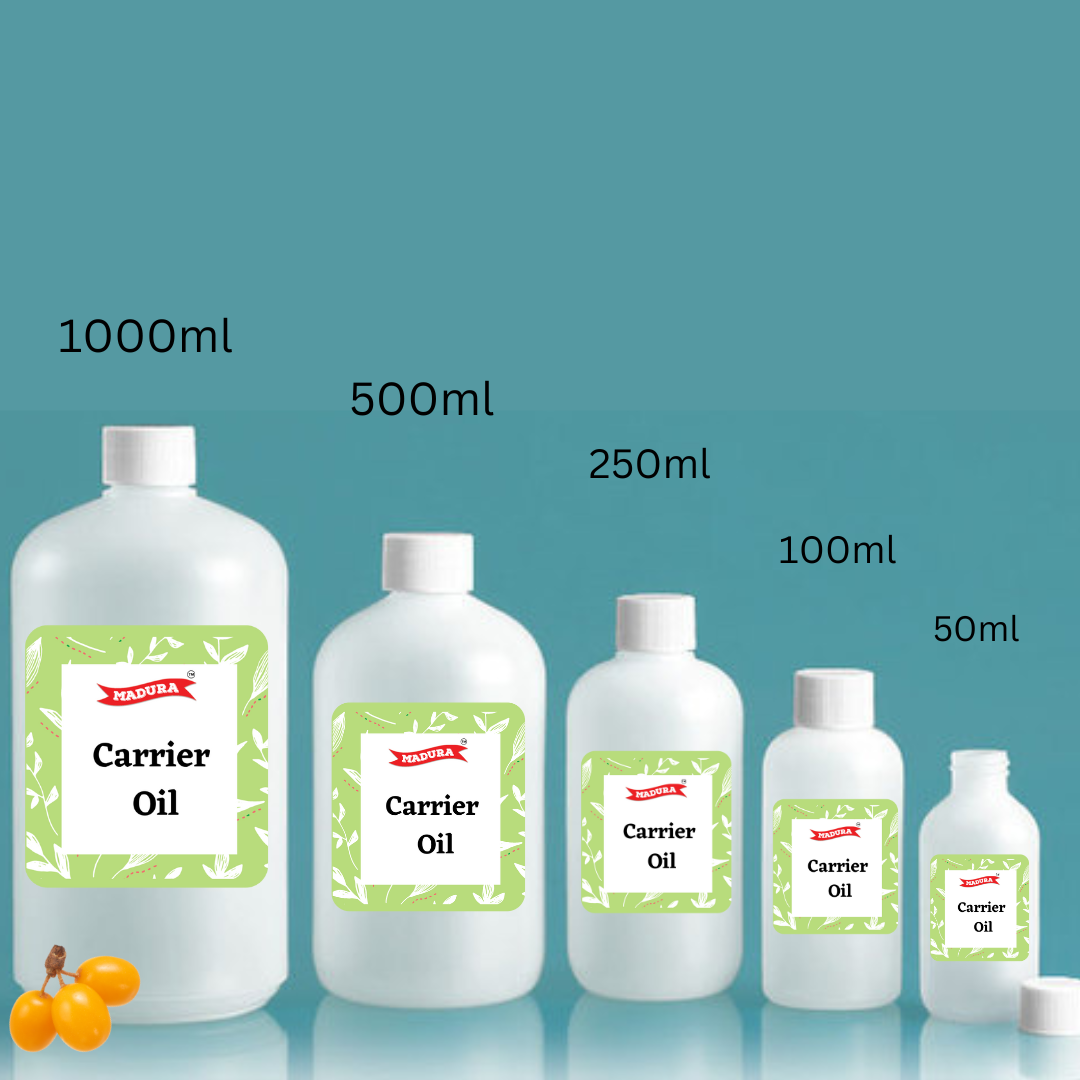
Store in a cool, dry place away from direct sunlight and heat, ideally refrigerated to maintain freshness. Keep the container tightly sealed when not in active use. The oil may thicken further when refrigerated and will return to its normal consistency at room temperature. Due to its high content of unsaturated fatty acids, Sea Buckthorn Oil is more prone to oxidation than many other carrier oils. Best before 9 months from packaging date.
Caution
Sea Buckthorn Oil has a strong natural orange-red pigment that may temporarily stain skin, fabric, and light coloured surfaces. Use in small percentages and dilute with a lighter carrier oil to reduce staining. Patch test is recommended before use on skin. In case of any allergic reaction, discontinue use and consult a dermatologist or physician.
Disclaimer
All information on this website is for educational and reference purposes only and does not constitute medical, professional, legal, or technical advice.
Intended Use
Our products are raw materials and ingredients supplied for cosmetic formulation, personal care, manufacturing, aromatherapy, candlemaking, soap making, food and beverage, confectionery, research, and related industries. Suitability for any specific application is the buyer's responsibility.
Natural & Batch Variation
Natural variations in colour, aroma, texture, viscosity, and potency may occur between batches, as this is characteristic of natural and plant-derived ingredients and does not indicate a quality defect.
For formulated and processed products, including chemicals, waxes, bases, butters, and extracts, variations in performance or specification may also occur between batches.
For colouring agents and food colours, variations in shade, intensity, particle size, dispersion, and thickness may occur between batches due to sourcing or processing differences. For flavor oils, variations in colour, taste profile, and aromatic strength may occur between batches.
Equipment & Kits
Equipment, accessories, moulds, containers, and kits are utility and starter-level items with no performance warranty. Product images, kit contents, and item brands or models may vary based on stock availability.
Safety & Internal Use
Essential oils, aroma compounds, flavor oils, concentrated extracts, and chemicals must be handled responsibly and diluted appropriately. Products intended for internal use, including herbal powders, Ayurvedic botanicals, and food-grade ingredients, should be used under the guidance of a qualified healthcare, Ayurvedic, or food safety practitioner.
Testing, Samples & Lab Reports
Customers are responsible for testing suitability within their own formulation and intended application before placing bulk orders. Samples are at your own cost, and free samples may be available subject to stock and product type. Sample size and quantity are at our discretion, and shipping charges apply. Laboratory test reports can be arranged on request at an additional cost.
Representative Documents: COA & MSDS
The COA and MSDS linked on product pages are representative documents shared for reference purposes only and may not reflect the exact batch supplied for your order.
Batch-specific documents can be requested before or at the time of purchase. It is the customer's responsibility to verify that specifications meet their intended use before purchasing in bulk.
B2B Terms
All transactions on this website are B2B in nature. By purchasing from us, you agree to our Terms & Conditions, Privacy Policy, Shipping Policy, and Refund Policy.