 Saltar para o conteúdo



Madurasherbals
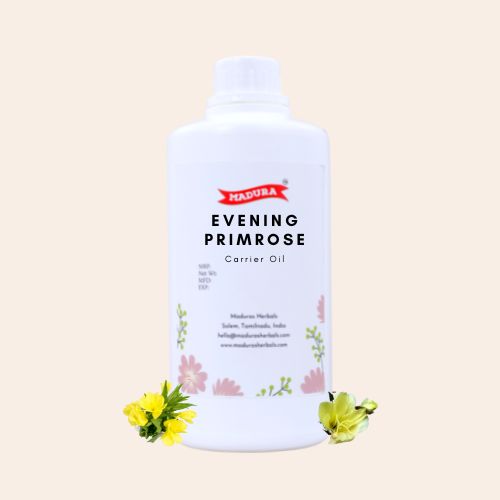
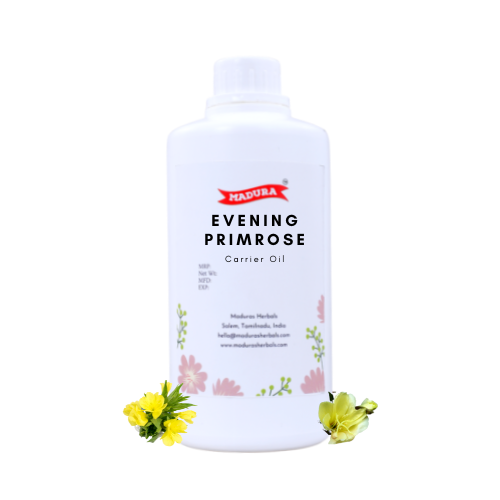
Evening Primrose Oil
Não foi possível carregar a disponibilidade de recolha
Product Description:
Evening Primrose Oil is a cold pressed carrier oil extracted from the seeds of the evening primrose plant (Oenothera biennis), a flowering plant once referred to as the King's Cure-All in traditional Western herbalism. The oil is pale yellow to golden in colour with a mild, earthy scent and a light to medium texture. Evening Primrose Oil has built a strong reputation among formulators for its place in facial serums and treatments aimed at dry, sensitive, and mature skin. At Maduras Herbals, we supply Evening Primrose Oil as a raw material for cosmetic manufacturers, DIY formulators, and skin care product developers looking for a nourishing, lightweight carrier oil.
Botanical and Trade Names
Botanical Name: Oenothera biennis
English Name: Evening Primrose Oil
INCI Name: Oenothera Biennis Oil
Other Common Names: Evening Star Oil, King's Cure-All Oil
Key Properties
- Cold pressed from evening primrose seeds with no heat and no chemical solvents involved
- Light to medium texture with a mild, earthy scent
- Naturally rich in essential fatty acids, including a notably high gamma linolenic acid content
- Unrefined and supplied in its natural state without bleaching or deodorisation
- Well suited for dry, sensitive, and mature skin formulations
- Non comedogenic profile suited for facial and scalp applications
- Compatible with other carrier oils, butters, and oil-phase ingredients
About Evening Primrose Oil
Evening primrose oil has a long history in skincare that predates modern cosmetic formulation by a considerable stretch. Native Americans used the plant to treat various skin conditions and also consumed its roots as food. The oil itself is extracted from the seeds of Oenothera biennis using a cold-pressing method, and what makes it genuinely valuable in cosmetic formulation is its fatty acid composition, particularly its gamma-linolenic acid content.
This oil is rich in unsaturated fatty acids, with linoleic acid making up the bulk at 60 to 85%, followed by gamma-linolenic acid at 7 to 12%. That GLA content is the key reason evening primrose oil is so widely used in products for dry, acne-prone, and irritated skin. It helps improve the skin barrier function, reduces transepidermal water loss, and provides both anti-inflammatory and repairing properties. Its unsaponifiable portion, which comprises around 1.5 to 2% of the oil, contains triterpenes, tocopherols, and phytosterols that have been studied for anti-inflammatory, antibacterial, and antifungal activities. Because of its high unsaturated fatty acid content, the oil is very sensitive to oxidation and can go rancid quickly if not stored correctly. Keeping it away from light, heat, and oxygen is important to protect its shelf life and therapeutic value.
| Property | Detail |
|---|---|
| INCI Name | Oenothera Biennis Oil |
| Sourced From | Native to Central America; now cultivated across North America and Europe |
| Processed & Packed | Processed & Packed in India |
| Function | Emollient |
| Absorption Rate | Typically fast; may vary slightly between batches |
| Recommended Usage Amount | Typically up to 100%; often blended with more stable oils in formulations |
| Heat Stability | Generally poor; must be added below 40°C — heat sensitive due to high GLA content |
| Colour | Typically yellow to greenish yellow; colour intensity may vary slightly between batches |
| Scent | Typical, slightly tart odour |
| Oxidation Stability | Generally unstable; antioxidant protection, cool dark storage, and addition during cool-down phase essential |
| Restrictions | None |
| Substitution | Borage oil |
Working with Evening Primrose Oil in Your Formulations
Evening primrose oil works well in lip care, haircare, anhydrous creams, balms, masks, butters, scrubs, and emulsions. It is also a good fit for anti-ageing products and nourishing salves where barrier repair and skin conditioning are the primary goals. When adding it to emulsions, it should go into the cool-down phase rather than the main heated oil phase to protect its heat-sensitive fatty acids.
Quality & Formulation Notes
Heat sensitivity is the main thing to plan around with evening primrose oil. It should only be added to formulations once the temperature is below 40°C, and in emulsions it must be added during the cool-down phase. It is also very prone to oxidation, so cool dark storage and antioxidant protection within the formula are both worth factoring in from the start to ensure a reasonable shelf life.
Applications
Skin Care Formulations: Facial serums, anti-ageing creams, body lotions, balms, dry and sensitive skin formulations
Hair Care Formulations: Scalp serums, leave-in conditioning blends, hair masks
Cosmetic Formulation: Carrier base for essential oil blends, lotion and cream oil-phase ingredient, soap making in small percentages
General Use: Bulk supply for cosmetic manufacturers, DIY skin and hair care kits, salon and spa product formulations
Packing and Storage
Store in a cool, dry place away from direct sunlight and heat, ideally refrigerated to maintain freshness. Keep the container tightly sealed when not in active use. As an unrefined, cold pressed oil rich in essential fatty acids, Evening Primrose Oil is more prone to oxidation than many other carrier oils. Best before 9 months from packaging date. Natural variation in colour and scent between batches is characteristic of a cold pressed, unrefined oil.
Caution
Patch test is recommended before use on skin. In case of any allergic reaction, discontinue use and consult a dermatologist or physician.
Representative Documents: COA
Disclaimer
All information on this website is for educational and reference purposes only and does not constitute medical, professional, legal, or technical advice.
Intended Use
Our products are raw materials and ingredients supplied for cosmetic formulation, personal care, manufacturing, aromatherapy, candlemaking, soap making, food and beverage, confectionery, research, and related industries. Suitability for any specific application is the buyer's responsibility.
Natural & Batch Variation
Natural variations in colour, aroma, texture, viscosity, and potency may occur between batches, as this is characteristic of natural and plant-derived ingredients and does not indicate a quality defect.
For formulated and processed products, including chemicals, waxes, bases, butters, and extracts, variations in performance or specification may also occur between batches.
For colouring agents and food colours, variations in shade, intensity, particle size, dispersion, and thickness may occur between batches due to sourcing or processing differences. For flavor oils, variations in colour, taste profile, and aromatic strength may occur between batches.
Equipment & Kits
Equipment, accessories, moulds, containers, and kits are utility and starter-level items with no performance warranty. Product images, kit contents, and item brands or models may vary based on stock availability.
Safety & Internal Use
Essential oils, aroma compounds, flavor oils, concentrated extracts, and chemicals must be handled responsibly and diluted appropriately. Products intended for internal use, including herbal powders, Ayurvedic botanicals, and food-grade ingredients, should be used under the guidance of a qualified healthcare, Ayurvedic, or food safety practitioner.
Testing, Samples & Lab Reports
Customers are responsible for testing suitability within their own formulation and intended application before placing bulk orders. Samples are at your own cost, and free samples may be available subject to stock and product type. Sample size and quantity are at our discretion, and shipping charges apply. Laboratory test reports can be arranged on request at an additional cost.
Representative Documents: COA & MSDS
The COA and MSDS linked on product pages are representative documents shared for reference purposes only and may not reflect the exact batch supplied for your order.
Batch-specific documents can be requested before or at the time of purchase. It is the customer's responsibility to verify that specifications meet their intended use before purchasing in bulk.
B2B Terms
All transactions on this website are B2B in nature. By purchasing from us, you agree to our Terms & Conditions, Privacy Policy, Shipping Policy, and Refund Policy.